
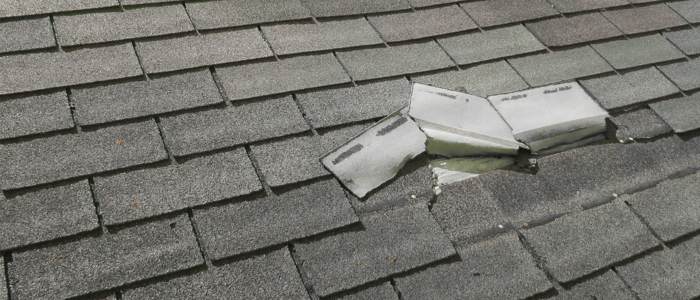
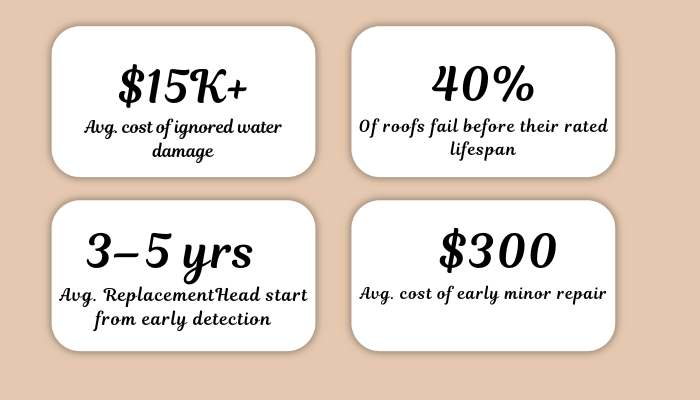
I’ll be straight with you: most roof damage I see on the job didn’t have to be as bad as it was. Homeowners walked past the warning signs for months — sometimes years — without recognizing them. By the time water was dripping through the ceiling or mold was spreading through the attic, what could have been a $500 repair had become a $15,000 replacement.
Your roof sends signals long before it fails. Curling shingles, dark ceiling spots, granules in the gutter — these aren’t cosmetic quirks, they’re your roof waving a red flag. This guide teaches you to read those signals the same way a professional roofer does, so you can act early, spend less, and protect everything under that roof.
Exterior Warning Signs
Start your inspection from the ground. You don’t need to climb your roof — in fact, I recommend you don’t without proper safety gear. Use binoculars or a drone camera to get a close look at these common exterior signs of roof damage.
Granule Loss in Gutters & Downspouts
Urgency – Moderate — Act Within 1–2 Years
Those tiny gritty pebbles accumulating in your gutters aren’t just debris — they’re the protective UV-blocking layer peeling off your asphalt shingles. Granule loss exposes the underlying fiberglass mat to sun, heat, and rain, dramatically accelerating deterioration. A little granule shedding in a new roof is normal. Heavy, consistent loss on a roof that’s 10+ years old is a serious end-of-life signal. Check your gutters during and after heavy rain for the clearest picture.
➜ Schedule a professional inspection to assess remaining shingle life.
Curling, Cupping, or Buckling Shingles
Urgency – High — Act Within 6–12 Months
Shingles that curl upward at the edges (cupping) or ripple across the middle (buckling) are failing at the material level. This happens from age, poor ventilation baking the shingles from underneath, or moisture trapped below the surface. Curled shingles are no longer lying flat — meaning water flows under them with every rainstorm instead of over them. They’re also vulnerable to being lifted by wind. If you spot widespread curling, your roofing investment timeline is likely nearing its end.
➜ Widespread curling = full replacement conversation. Don’t patch and wait.
Missing or Cracked Shingles
Urgency – Critical — Act Immediately
A missing shingle is an open wound on your roof. Without that layer, rain hits the underlayment directly — and underlayment is not designed for prolonged water exposure. One or two missing shingles after a storm is repairable. Widespread cracking or frequent loss after every storm means the adhesive strips holding shingles down are failing across the board. Don’t spot-patch a failing roof — it’s like putting a bandage over a broken arm.
➜ Replace missing shingles within days. Get a full assessment if loss is widespread.
Damaged or Missing Flashing
Urgency – High — Act Within 3–6 Months
Flashing is the thin metal (usually aluminum or galvanized steel) that seals the joints where your roof meets vertical surfaces — chimneys, skylights, vents, and walls. It’s the most leak-prone area on any roof. Cracked sealant, rusted flashing, or sections that have pulled away from the surface are direct entry points for water. In my experience, flashing failure is responsible for nearly 30% of all roof leaks — and most are completely preventable. Learn more in our complete roof flashing guide.
➜ Have flashing inspected and resealed every 5–7 years proactively.
Moss, Algae, or Lichen Growth
Urgency – Low-Moderate — Address This Season
Green or black streaks running down your shingles are algae (Gloeocapsa magma). Thick green patches are moss. Both trap moisture against the shingle surface and cause premature aging. Lichen (the crusty gray-green variety) is the most damaging — it bonds directly to the granule layer and literally tears it off when removed incorrectly. Don’t let anyone pressure-wash your shingles to remove these — it strips the granules and voids your warranty. Ask your roofer about algae-resistant shingle options at your next replacement.
➜ Use zinc strips or approved roof wash solution. Never pressure wash.
Sagging or Uneven Roofline
Urgency – Critical — Call Today
Stand at the end of your driveway and look at your roofline. It should be perfectly straight and level. Any visible dip, bow, or sag is a structural red flag. This indicates rotted decking, failed rafters, or in severe cases, compromised structural support from long-term water intrusion. A sagging roof is not a “wait and see” situation — it can become a collapse risk. Call a licensed roofer the same day you notice this. Learn what to expect in our roof structural damage guide.
➜ Do not wait. This is an emergency repair situation.
The leaks I dread most aren’t the ones homeowners call me about — they’re the ones silently spreading in attics and wall cavities for months before anyone notices.
Interior Warning Signs
Some of the most telling signs of roof damage are hiding inside your home. Check your attic and ceilings at least once a year — especially after heavy storms or in early spring when snowmelt is active.
Water Stains on Ceilings or Walls
Urgency – Critical — Act Immediately
Brown or yellow rings on your ceiling are almost always moisture. The tricky part? The stain may not be directly below the leak — water travels along rafters and insulation before dripping down, sometimes many feet from the actual entry point. Don’t just paint over it. That stain is telling you something is wrong overhead. Have a roofer investigate the full path of the moisture, not just the symptom you can see. Check our guide on how to trace a roof leak to understand the process.
➜ Don’t ignore or paint over it. Trace the moisture source immediately.
Mold or Mildew in the Attic
Urgency – High — Act Within 30 Days
Attic mold is almost always a roof or ventilation problem. Either moisture is infiltrating through damaged roofing materials, or warm moist air from inside your home is rising into a poorly ventilated attic and condensing. Both scenarios breed mold fast. Attic mold remediation costs $1,500–$5,000+ on its own — before you’ve fixed the actual roof. Proper attic ventilation is a critical but often overlooked part of your roofing system’s health.
➜ Hire a roofer and a mold inspector simultaneously — both problems need solving.
Daylight Visible Through Roof Boards
Urgency – Critical — Call Today
Go into your attic on a sunny day and turn off the lights. If you can see light coming through the roof deck, water follows the same path. This means you have gaps, holes, or cracked decking that are bypassing both your shingles and underlayment. This is a direct, active vulnerability — not a maybe. Call a roofer.
➜ Any daylight in the attic requires an emergency roof inspection.
Sudden Spike in Energy Bills
Urgency – Moderate — Investigate This Month
This one surprises people. If your heating or cooling bills have jumped without explanation, your attic insulation may have been compromised by moisture, or your roof’s ventilation system may be failing — forcing your HVAC to work harder to maintain temperature. A damaged roof doesn’t just let in water; it lets in heat, cold, and energy waste. Check our energy-efficient roofing guide to understand the connection between roofing and utility costs.
➜ Have attic insulation and roof ventilation inspected together.
Storm Damage Signs
After any significant storm — high winds, hail, heavy snow, or ice — do a visual inspection of your roof from the ground within 48 hours. Insurance claims often have strict time windows, and documenting storm damage promptly protects your claim.
Hail Damage — Dents & Bruising
Urgency – High — File Claim Within 30 Days
Hail damage on asphalt shingles appears as dark, soft spots — like a bruise — where the impact has fractured the fiberglass mat beneath the granule surface. Check aluminum gutters and downspouts for dents (they’re easier to spot than shingle bruising). Check your air conditioning unit covers too — dented AC fins after a storm almost always mean your roof took a hit. Contact your insurance company promptly and request a professional hail damage inspection before any claims adjuster visit.
➜ Document with photos. Call your insurer within 48–72 hours of storm.
Wind Damage — Lifted or Peeled Shingles
Urgency – Critical — Repair Within 24–48 Hours
High winds (50+ mph) can lift shingle edges and break the adhesive seal strips. Even if the shingle doesn’t blow off completely, a lifted shingle is a water entry point at the next rain. Roof edges and ridgelines are most vulnerable. Look from the ground for any shingles that appear raised, flipped, or missing. If a storm left debris on your roof, don’t ignore it — branches can puncture or abrade shingles as they shift.
➜ Post-storm inspection within 24 hours. Temporary tarping if shingles are missing.
Ice Dams Along the Eaves
Urgency- High — Address Before Next Melt Cycle
Ice dams form when heat escaping from a poorly insulated attic melts snow on the roof, which then refreezes at the cold eaves. The ice wall blocks drainage, forcing meltwater back up under your shingles. The damage from a single winter’s ice dams can include soaked insulation, stained drywall, and rotted fascia boards — all invisible until spring. Ice dams are a symptom of inadequate attic insulation and ventilation, not just a winter weather issue.
➜ Add attic insulation and improve ventilation to prevent recurrence.
Clogged or Overflowing Gutters
Urgency- Moderate — Address This Season
Gutters are part of your roofing system, not just a cosmetic feature. Clogged gutters force water to back up against the fascia board and sometimes underneath the first course of shingles. In winter, they become ice dam factories. Water overflowing gutters also pools at your foundation. Clean your gutters at least twice a year — fall and spring — and inspect the fascia boards for rot while you’re at it. Rotted fascia is a telltale sign of long-term gutter overflow.
➜ Clean gutters biannually. Inspect fascia for soft spots or rot.
Your Roof Is 20+ Years Old
Urgency- Moderate — Get an Inspection Now
Age itself is a warning sign. Even if your roof looks okay from the street, a 20-year-old asphalt shingle roof is in the final phase of its service life. The materials are breaking down at the molecular level — adhesive strips lose their grip, granule bonding weakens, and underlayment becomes brittle. You may have 2–5 years left or you may have 0. Only a hands-on inspection by a licensed roofer can tell you where you stand. Don’t wait for the leak to tell you. Read our shingle roofing investment guide to understand when replacement becomes the smart financial move.
➜ Book a professional inspection. Know your remaining runway before it decides for you.
Quick Self-Inspection Checklist
Use this checklist every spring and after any major storm. You don’t need to climb your roof — a pair of binoculars and a flashlight in the attic will cover most of it.
Exterior Checklist
- Look for missing, cracked, or lifted shingles along all roof planes
- Check gutters for granule buildup after rain
- Look at the roofline — is it straight with no visible dips?
- Inspect chimney, skylights, and vents for flashing gaps or rust
- Look for moss, algae, or dark streaking on the shingle surface
- After hail storms, check gutters and AC covers for dents
- Check fascia boards for rot or peeling paint (sign of water overflow)
Interior
- Turn off attic lights and look for daylight through roof boards
- Check insulation for moisture, dark staining, or musty smell
- Look at rafters and sheathing for mold, mildew, or water marks
- Check ceilings below the attic for brown/yellow staining
- Compare your energy bills — have heating/cooling costs risen unexpectedly?
- Check attic ventilation — are all vents clear and unobstructed?
Important: This checklist helps you identify warning signs — it does not replace a professional inspection. A licensed roofer has the tools, training, and experience to identify damage that isn’t visible from the ground or a quick attic glance. Schedule a professional inspection every 3–5 years regardless of visible symptoms.
FAQs
How do I know if my roof damage is covered by insurance?
Most homeowner insurance policies cover sudden, storm-related damage (hail, wind, falling trees) but not gradual deterioration due to age or lack of maintenance. Document damage with photos immediately after a storm, then call your insurer. Have a licensed roofer present during the adjuster’s inspection — they’ll advocate for your claim. Read our roof insurance claim guide for a step-by-step walkthrough.
Can I repair just part of my roof instead of replacing it all?
Sometimes — but it depends on the roof’s age and extent of damage. If your roof is under 15 years old and damage is isolated to one section, partial repair makes sense. If it’s 20+ years old, patching one area often just delays the inevitable while the rest continues to deteriorate. I always recommend a full inspection before committing to a partial repair on an aging roof.
How often should I have my roof inspected?
Professionally, every 3–5 years for a roof under 15 years old. Every 1–2 years once it hits the 15–20 year mark. And always after any major storm — hail, high winds, or significant snowfall. DIY visual checks from the ground every spring and fall are also recommended.
What’s the most commonly missed sign of roof damage?
Flashing failure, without question. Homeowners focus on shingles because they’re visible, but the seals around chimneys, skylights, and pipe vents are where the majority of leaks originate. A roof can look great from the street while actively leaking at the flashing. Always have flashing inspected as part of any roof assessment.
Final Thoughts
Your roof doesn’t fail overnight. It sends warnings weeks, months, sometimes years before it gives out. The difference between a $400 repair and a $15,000 replacement almost always comes down to one thing — how early you paid attention.
You don’t need to be a roofing expert to protect your home. You just need to know what to look for, act when you see it, and trust a licensed professional to handle the rest.
A shingle roof done right — with quality materials, proper installation, and basic maintenance — is one of the smartest long-term investments a homeowner can make. It protects your family, your belongings, your energy bills, and your property value all at once. That’s not something you want to leave to chance.
So do yourself a favor — walk outside today, look up, and really look at your roof. Check your gutters. Peek in your attic. And if something doesn’t look right, don’t wait. The best time to fix a roof problem is always before it becomes an emergency.
Your home is worth protecting. Your roof is where that protection starts.